
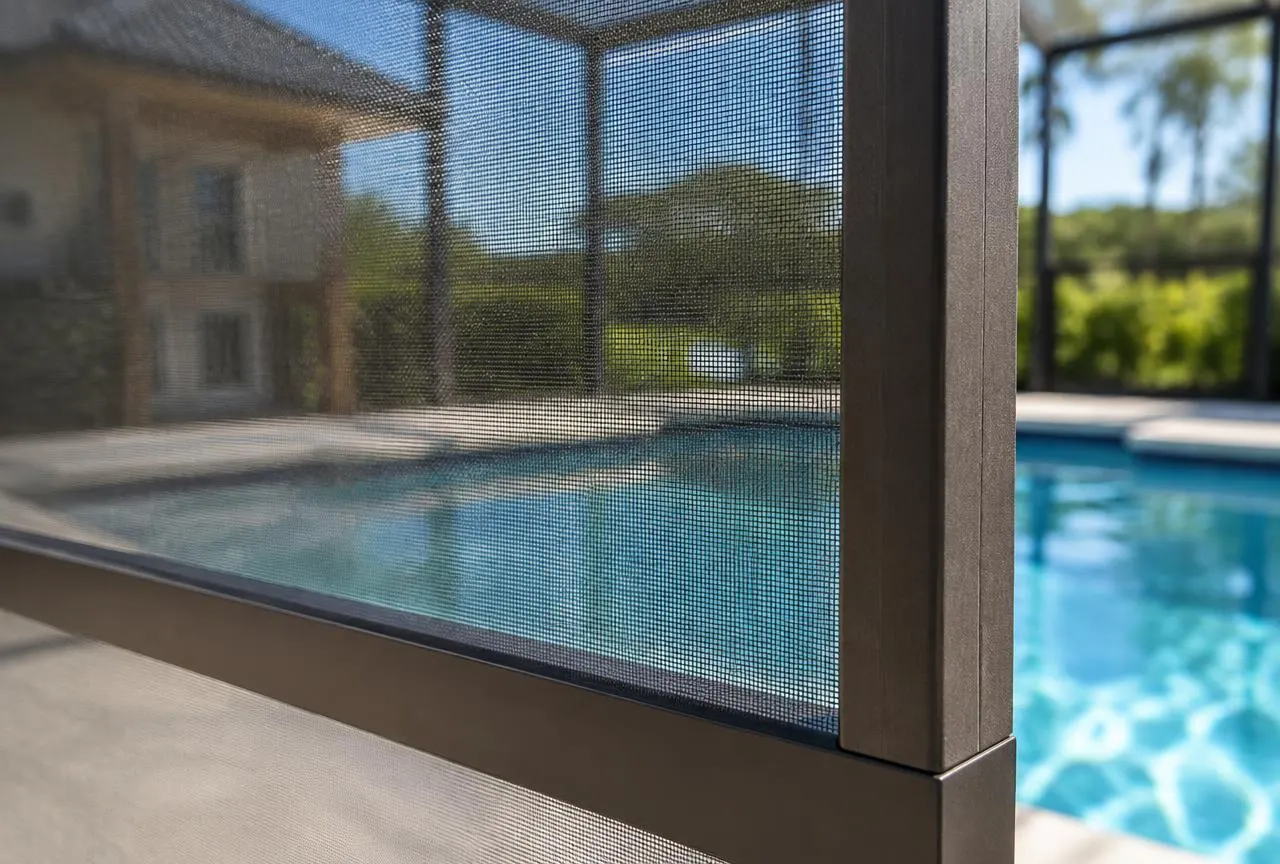
Screen is the part of an enclosure that works hardest. It faces the full Florida sun every day, takes the brunt of summer storms, and gets brushed by landscaping, pets and pool toys. Over the years mesh fades, loses tension, tears and lets insects back in. When that happens across an enclosure, full rescreening brings the whole structure back to a clean, uniform look.
We provide full rescreening for pool cages and screened lanais in Sarasota and the surrounding area. Full rescreening replaces the aging screening across the enclosure so the finished result has a more consistent appearance from section to section.
Signs it may be time to rescreen
- Screen looks faded, chalky or discolored, especially on sun-facing walls and roof panels.
- Panels sag, billow in the wind or have pulled loose from the frame.
- Tears and holes are appearing in multiple areas and insects are getting inside.
- Your view through the screen has become hazy or dark.
- You want to discuss screening choices that may better suit your priorities for visibility, airflow or insect protection.
Choosing screening for your enclosure
Screening materials can differ in visibility, airflow, weave and durability. The appropriate choice depends on the enclosure, the surrounding environment and the homeowner's priorities. Available screening options can be discussed for the specific project.
Screening choices for a full rescreen
- No-see-um screen. A tighter weave that helps keep out very small biting insects, often useful near water and preserves.
- Privacy screen. A denser screen that can reduce visibility into selected areas of the enclosure.
- Solar screen. Screening that can help cut glare and harsh sun on exposed walls.
- Pet-resistant screen. A heavier screen often chosen for areas where pets spend time.
Many homeowners combine screen types, selecting what suits each side of the enclosure based on their priorities and the project.
Characteristics to consider
- Visibility. How open the view through the enclosure feels from inside.
- Airflow. How freely breezes move through the screened space.
- Insect protection. How well the screening keeps insects out of the pool area or lanai.
- Durability. How the screening holds up to everyday use around the home.
- Sun exposure. How the enclosure's orientation and sun exposure may factor into the choice.
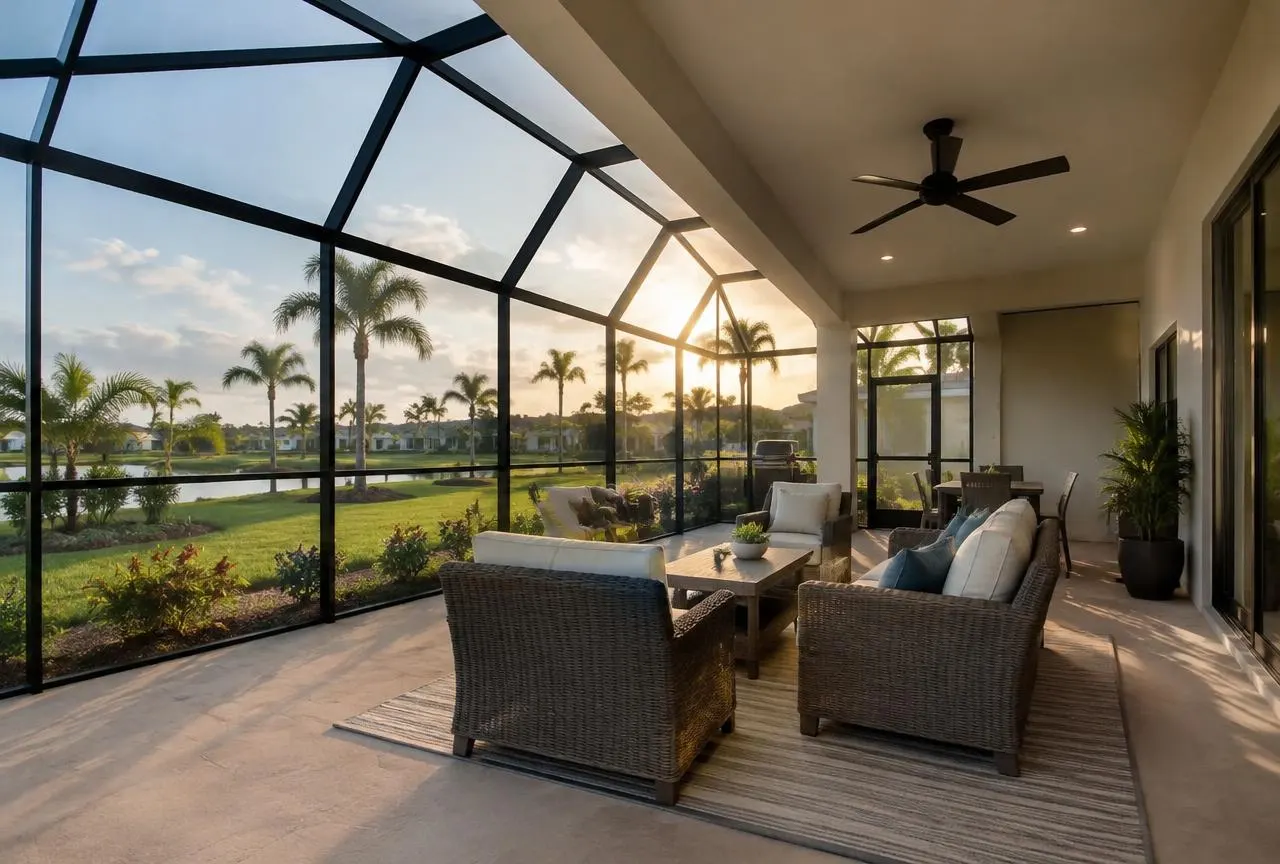
Rescreening or replacement?
Full rescreening may be appropriate when the aluminum frame is still sound and the screening is aging. If the enclosure structure itself is showing significant age, or if you want broader changes to the enclosure design, full pool cage replacement may be the more appropriate direction. Tell us about the condition of the enclosure and what you want to change. We can discuss whether full rescreening or full replacement may be the more appropriate direction.
How a rescreening project works
A full rescreening project renews the screening across the pool cage or lanai while retaining the existing enclosure frame when it is suitable to remain. Project details vary with the size, configuration and condition of the enclosure, as well as the screening selected. Timing also depends on weather and other project details, and what to expect is discussed for your specific project.
Who full rescreening is right for
Full rescreening is a good fit for homeowners whose existing pool cage or lanai frame remains suitable, whose screening is aging or worn across the enclosure, and who want to renew the screened surface without replacing the entire cage. If you are interested in screening a covered outdoor area that has never been enclosed, explore our lanai enclosure options.